Teagasc Crop Report
Current Issues 2026
Current Issues 2026
To view the full report you must have an existing account with Teagasc ConnectEd.
Farmers sign in hereAlready have a ConnectEd account? Connected Client or Teagasc staff log in here
Irrigation
Just like all other crops potatoes are suffering from the recent dry spell with soil moisture deficits ranging from 40mm in the South West up to 60mm in the Midlands. With temperatures commonly between 25 -27oC over the next week most crops have simply shut down unless irrigation is available. Yields will already have been affected and quality will most likely also have been affected with both common scab and secondary growths in tubers. Many growers are applying various trace elements, nutrient supplements etc. however in truth all crops want is water. How much benefit any product applied to stressed crops will be is anyone’s guess at this stage and they may even cause further damage. The likelihood is that they will keep the tops greener but may not significantly influence final yield.
Where irrigation is available prioritise those crops that need it most, maincrops are currently bulking up at the moment and have a very high water demand. Where some crops haven’t received any water difficult decisions may need to be made at this stage, as moving equipment from one field to another takes time and the logistics have to be taken into account. Will the crop that is currently being irrigated suffer if you can’t get back in time before it too starts to dry out? It may well be better to “sacrifice” one crop rather than putting all of the crops at risk. Approx. 5-7mm of water per day is normally lost from a crop of potatoes at this time of year through transpiration and evaporation. Therefore aim to apply 25mm per application this probably means at least two applications per week.
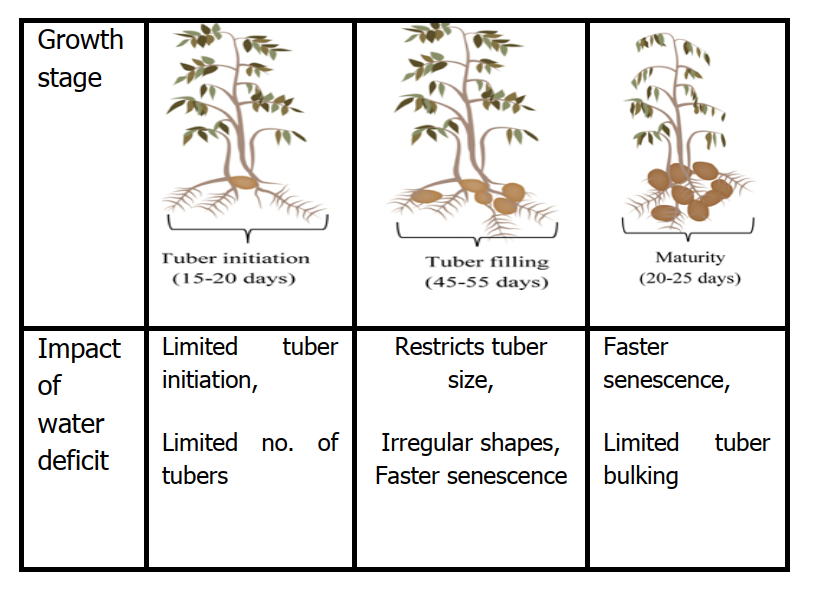
Depending on the growth stage of the plant the drought can have a number of effects, for example: if the plant was at tuber initiation then most likely potential tubers will have been lost, however if the tubers have formed and the crop when becomes stressed, then tuber swelling will stop, skins will start to set leading to secondary growths in the tubers when bulking starts up again after rain. Figure 1 below shows the effect of drought at different stages in the crops lifecycle.
Figure 1. Drought effect at different growth stages